Sheet Metal Tolerances: What Can You Actually Achieve (and What You Can't)
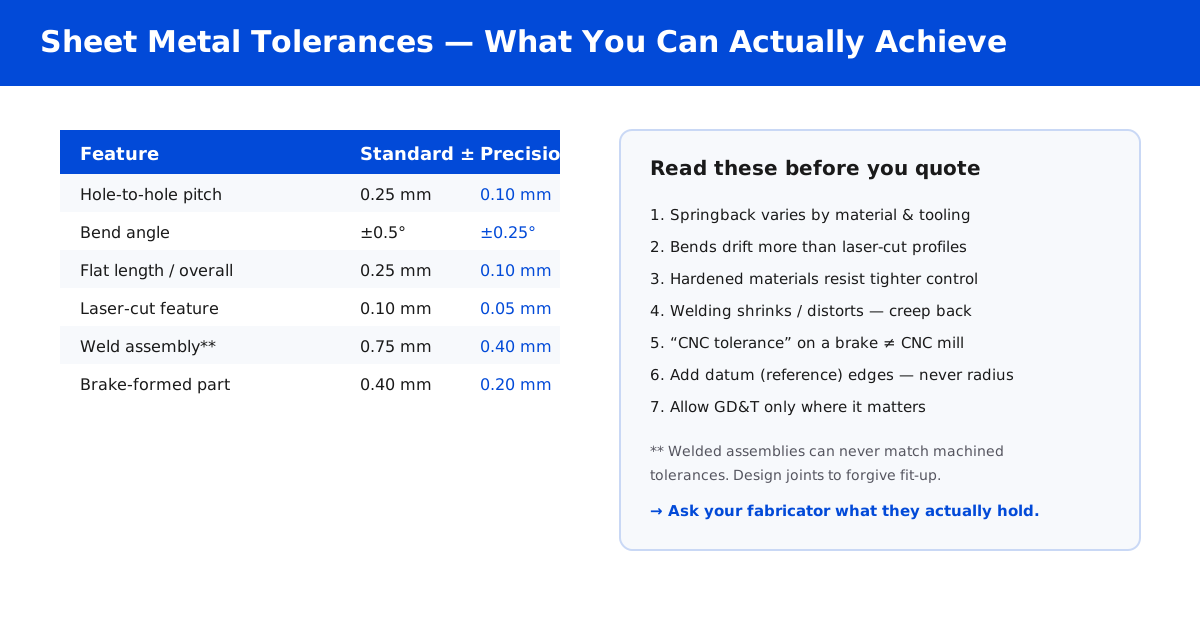
Sheet Metal Tolerances: What Can You Actually Achieve (and What You Can’t)
Tolerances are where good projects go to get expensive. Put a tight callout on a feature that sheet metal physically can’t hold, and you’ll pay for rework, or worse, scrap. But it’s also easy to under-specify and get parts that don’t fit.
This guide gives you the honest numbers — what standard and precision sheet metal fabrication can actually achieve, and the difference between a machined part and a formed one.
The truth first
Sheet metal is not a machined process. A press brake forms metal with springback, a laser cuts with a taper, and welding distorts the assembly. Expecting CNC-machining tolerances (e.g. ±0.01 mm) on a bent sheet metal part is unrealistic and will only increase your cost.
That said, a good sheet metal shop holds useful tolerances — as long as you understand what’s achievable and what isn’t.
Realistic tolerance bands
| Feature | Standard ± | Precision ± |
|---|---|---|
| Laser-cut profile / slot | 0.10 mm | 0.05 mm |
| Hole-to-hole pitch | 0.25 mm | 0.10 mm |
| Flat length / overall | 0.25 mm | 0.10 mm |
| Brake-formed part | 0.40 mm | 0.20 mm |
| Bend angle | 0.5° | 0.25° |
| Welded assembly | 0.75 mm | 0.40 mm |
These are typical values on tooling in good condition. They are not guarantees. Always confirm with your fabricator.
Why sheet metal drifts (and how to design around it)
Springback
When you bend metal, it tries to spring back a bit. The harder the material (stainless, high-strength steel), the more it springs back. This is why a “90° bend” isn’t always 90° after it leaves the brake.
Design tip: For a genuinely square corner, add a little over-bend or call the angle to a reasonable tolerance (±0.5°).
Laser taper
A laser beam isn’t perfectly parallel, so cut edges can be slightly tapered. On thicker material this becomes more noticeable. For a precision fit, cut the feature or add a fine tolerance only where necessary.
Hole-to-edge
A hole too close to a bend line will distort as the metal forms. Keep holes ≥ 1.5 × t from the bend, or offset them to a flat area. This is a geometry issue, not a machine issue.
Weld distortion
Welding is heat — heat shrinks metal. A long welded assembly will pull and twist. That’s why welded enclosures hold looser tolerances than individual formed pieces.
Design tip: Don’t put tight tolerances across a weld. Let the joint absorb fit-up, or machine critical faces after welding.
Where it’s smart to specify tight
Not every feature needs a tight tolerance. Spend the money where it matters:
- Mounting/mating surfaces — where the part connects to something else
- Holes for bolts or bushings — they must align
- Critical datum edges — reference edges for everything else
- Bearing or sealing faces
Where it’s a waste of money
- Aesthetic edges — cosmetic tolerances don’t need precision machining
- Every hole — only the ones that align matter
- Across welded joints — let them breathe
- Features that aren’t functionally critical — don’t pay for ±0.05 mm unless you need it
How to spec tolerances cleanly
- Use GD&T selectively. Datum the part, then tolerance only what’s functional.
- Tolerance from an edge, not from a radius. Radii aren’t reliable references.
- Give a tolerance, not a “make it fit”. Vague notes cause expensive surprises.
- Separate “cut” features from “formed” features — they hold different tolerances.
- Ask your fabricator what they actually hold. It varies by machine and material.
A blunt cost warning
A precision tolerance (e.g. ±0.05 mm) can cost 2–4× more than a standard tolerance on the same part. If you put precision callouts everywhere, you’ll pay for it everywhere. If you only put them where they’re needed, you save real money and still get a part that works.
FAQ
What’s the tightest tolerance you can hold on a laser-cut part?
Typically ±0.05 mm on thinner material and good tooling. But it’s the exception, not the rule, and it costs more.
Can you hold machined tolerances on sheet metal?
No. Bent sheet metal springback and weld distortion mean you can’t match CNC machining. Design joints and features to accept realistic tolerances.
Why do my bolted holes not line up?
Usually because a hole is too close to a bend, or tolerances were called across a welded joint. Move holes away from bends and reduce the tolerance to what the process holds.
Should I use GD&T or basic dimensioning for sheet metal?
A little GD&T is valuable, especially datums for critical features. But don’t over-apply it — sheet metal fabrication is not a machined-parts world.
Related reading:
- Sheet Metal Bend Allowance & K-Factor
- Sheet Metal Welding Design Guide
- Precision & Quality Control in Sheet Metal Laser Cutting
The goal isn’t the tightest tolerance — it’s the right tolerance for the right feature. Send us your drawing and we’ll tell you what’s realistic, what’s expensive, and the cheapest way to make it work.