How to Fasten Sheet Metal: Inserts, Weld Nuts, Rivets, and Joining Methods Compared
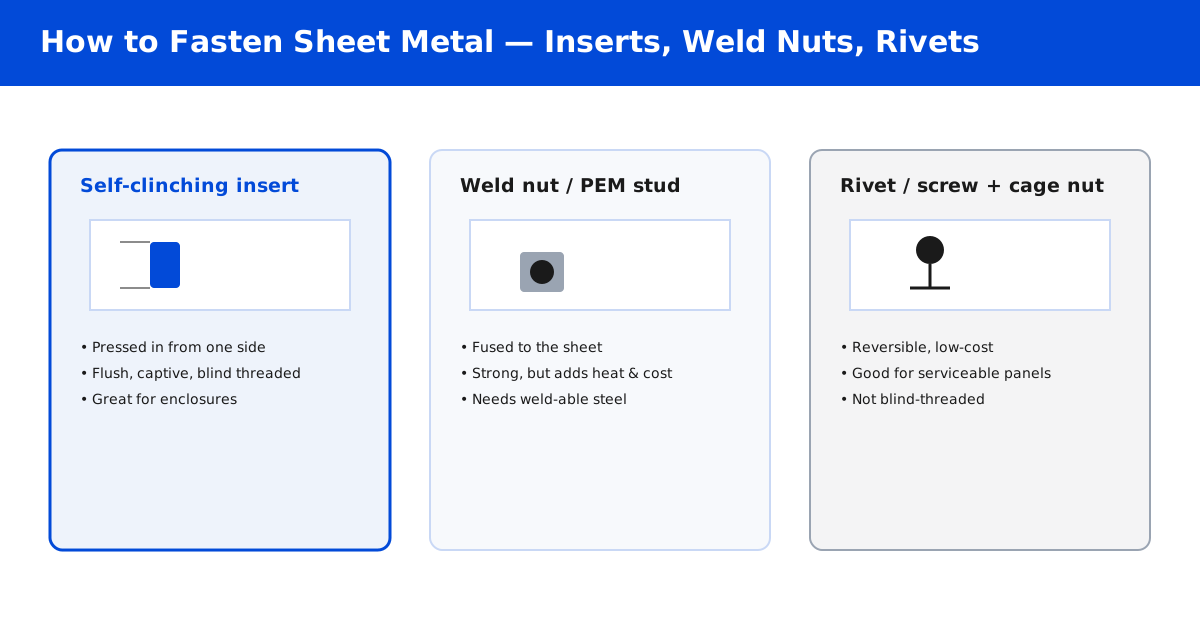
How to Fasten Sheet Metal: Inserts, Weld Nuts, Rivets, and Joining Methods Compared
Joining two pieces of sheet metal — or fastening hardware to a sheet — is where a lot of assemblies either come together clean or become a headache. The method you choose affects strength, serviceability, cost, and how long it takes.
Here’s an honest breakdown of the common ways to fasten sheet metal, so you can pick the right one.
The main options
| Method | Strength | Serviceable | Added heat | Typical cost |
|---|---|---|---|---|
| Self-clinching insert | High | Yes (if removable) | No | Med |
| Weld nut / stud | High | Yes | Yes | Med–High |
| Rivet | Med | Mostly no | No | Low |
| Screw + cage nut | Med–High | Yes | No | Low–Med |
| Formed features | Varies | Depends | No | Low |
| Weld / seam | Very high | No | Yes | Varies |
Self-clinching inserts (PEM nuts/studs)
A self-clinching fastener is pressed into a hole. The metal flows around it and locks it in place, leaving a captive threaded insert or stud.
Strengths:
- Pressed from one side, flush on the other
- Captive — no loose hardware that can drop into the assembly
- Great for enclosures and electronics where you need a threaded point in thin sheet
- No heat, no weld distortion
Limits:
- Needs a minimum thickness (often ~1 mm)
- Requires the right hole size and press
- Not removable once pressed in (unless you replace it)
Best for: enclosures, chassis, boxes, anywhere you need a clean threaded point in thin metal.
Weld nuts and weld studs
A nut or stud is welded onto the sheet, giving a strong permanent threaded point.
Strengths:
- Very strong, handles high loads
- Adds a threaded point on the outside of a panel
- Works on thicker material
Limits:
- Adds heat — can distort thin sheet
- More cost and time to weld, clean, and inspect
- Needs a weldable material (steel)
Best for: load-bearing joints, structural frames, heavier sheet.
Rivets
A rivet deforms to clamp two sheets together. It’s a low-cost, permanent-ish mechanical joint.
Strengths:
- Simple, quick, cheap
- No heat, no weld distortion
- Good for high volume and automated assembly
Limits:
- Generally not designed for threaded connection
- Permanent — harder to service
- Leaves a visible head
Best for: thin sheet panels, decorative joints, high-volume assemblies where you don’t need to unscrew later.
Screws + cage nuts / PEM standoffs
A screw through the sheet into a nut that’s held captive on the other side (cage nut, or a self-clinching standoff).
Strengths:
- Serviceable — you can disassemble
- Good when a panel needs to be removable
- Modest cost
Limits:
- Needs captured hardware on the back
- Requires clearance behind the panel for the nut
Best for: serviceable covers, access panels, modular enclosures.
Formed features (tabs, bent hooks, snap-fits)
Instead of adding hardware, you design the sheet metal to latch itself — bent tabs, hooks, spring fingers, or snap-fit clips.
Strengths:
- No added hardware, no extra cost
- Fast assembly
- Clean, tool-free joins
Limits:
- Less strong than mechanical or welded joints
- Requires careful design and tolerances
- Not ideal for high loads
Best for: cosmetic panels, clips, covers, and parts that snap together without tools.
How to choose: a simple decision tree
-
Does it need to be threaded?
- Yes → self-clinching insert (thin sheet) or weld nut (thick/heavy).
- No → go to step 2.
-
Does it need to be serviceable / removable?
- Yes → screws + cage nut, or a form-fit access panel.
- No → rivet or a formed snap-fit.
-
Does it carry a high load?
- Yes → weld, or a strong self-clinching insert on appropriate thickness.
- No → light mechanical or formed join.
-
Is heat a concern?
- Yes → avoid weld; use mechanical or self-clinching.
Avoid the classic pitfalls
- Hole too close to an edge — the material tears or the insert pulls out.
- Wrong thickness for the insert — the fastener won’t clinch properly.
- No clearance behind the panel — a self-clinching stud or cage nut needs room.
- Clashing inserts — two inserts too close to each other can interfere.
- Over-tightening a screw into a rivet nut — strips the thread.
FAQ
What’s the strongest way to fasten sheet metal?
Welding, or a strong self-clinching insert on the right thickness. For a removable threaded point in thin sheet, self-clinching inserts are the go-to.
Do self-clinching inserts come out?
No — once pressed in they’re permanent. If you need to remove them, you drill or replace them.
What’s the cheapest way to join sheet metal?
Rivets or formed snap-fits, as long as you don’t need a threaded, high-load joint.
Can I bend a tab to hold two sheets together?
Yes, that’s a formed feature. It’s cheap and fast, but it’s not as strong as a mechanical or welded joint.
Related reading:
- Sheet Metal Assembly Services: Techniques and Applications
- Common Sheet Metal Design Mistakes
- Sheet Metal Welding Design Guide
The right fastening method depends on whether it needs to be threaded, removable, or load-bearing. If you’re deciding on hardware for your build, send us the details and we’ll recommend the best fit.