Sourcing Sheet Metal Parts from China: A Buyer's Guide to DFM, Quality, and Cost
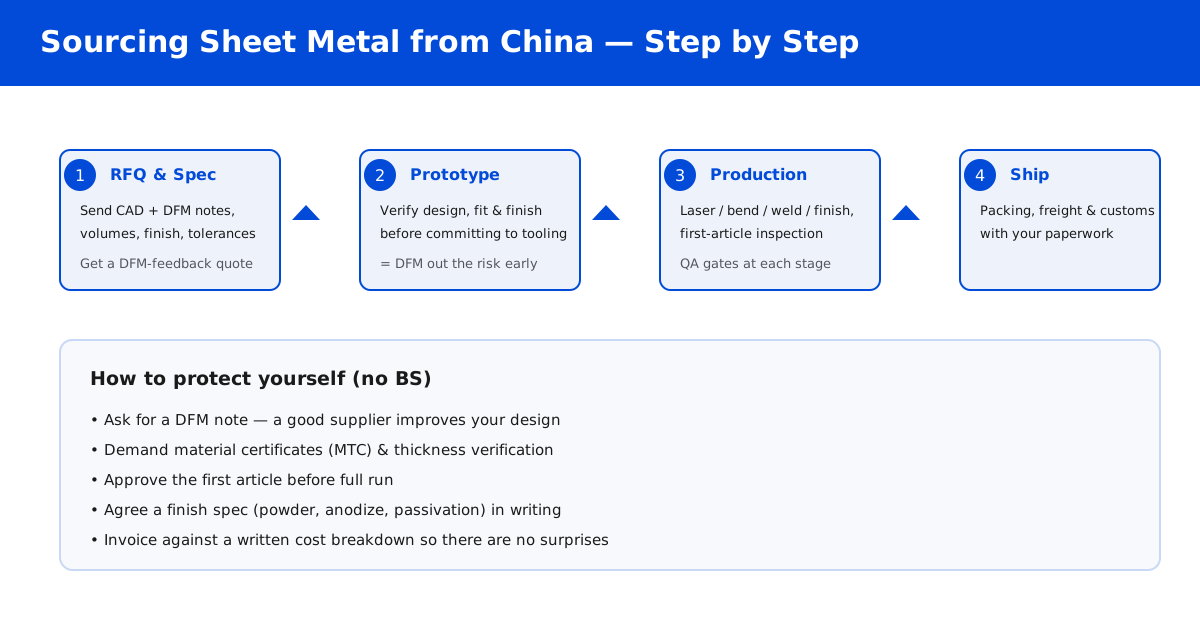
Sourcing Sheet Metal Parts from China: A Buyer’s Guide to DFM, Quality, and Cost
China is a world leader in sheet metal fabrication for a reason: capable tooling, a deep supply chain, and — when you do it right — very competitive pricing. But “sourcing from China” is not a magic discount button. The parts you get back are only as good as the spec you sent and the process you set up around it.
This guide is the honest playbook for buying custom sheet metal from China, with the things that actually protect you.
The realistic timeline
| Stage | What happens | Typical time |
|---|---|---|
| RFQ & spec | Send CAD + requirements, get a DFM quote | Days |
| Prototype | Verify design, fit, and finish | 1–2 weeks |
| Production | Cut, bend, weld, finish, inspect | 2–6 weeks |
| Ship | Pack, freight, customs, delivery | 1–4 weeks |
Plan your lead time, not just your price.
How to actually get what you paid for
1. Use DFM as your first filter
A good fabricator will tell you how to make your part cheaper and better — not just quote it. If a supplier returns a quote with no technical comments on a poor drawing, that’s a red flag. The DFM note is your free insurance.
2. Send a complete, unambiguous spec
Vague specs create expensive surprises. Include:
- Material and grade (e.g. SUS304, Q235, AL5052)
- Thickness in millimetres (not just gauge)
- Finish (powder colour / RAL, anodize thickness, passivation)
- Tolerances (only where functional)
- Hardware and inserts
- Inspection requirement (first article, CMM, material certs)
3. Demand material certificates
Ask for a material certificate (MTC) and verify the thickness with a gauge. “We used stainless” is not a spec — you want the grade on paper.
4. Approve a first article before the full run
The first-article inspection (FAI) is your chance to catch problems while they’re cheap. If you skip it, you only learn about issues when the whole batch arrives.
5. Agree the inspection standard in writing
Define what “good” means before production: dimensional checks, surface finish, coating thickness, and the acceptance criteria. Write it down so there’s no argument later.
The quality gates to insist on
- Incoming material check — grade and thickness verified on arrival
- In-process checks — especially after cutting and bending
- Weld inspection — if welding is involved
- Finish / coating check — coating thickness, colour, adhesion
- Final dimensional inspection — a real measuring report, not a promise
DFM ideas that cut your cost even before you buy
- Simplify the part — fewer bends, less welding
- Use standard material and thickness — avoid hard-to-get alloys
- Liberalise non-functional tolerances — precision everywhere costs everywhere
- Consolidate brackets — can two parts be one?
- Increase batch size — set-up and tooling amortise over more units
Where overseas sourcing breaks down (and how to avoid it)
The finish. “Powder-coated” means many things. Agree on the colour code, film thickness, and prep standard. Get a sample — always.
The material. Verify the grade. Cheap “stainless” or “aluminium” can be substituted. A material cert and a thickness check protect you.
The tolerance. Overseas shops can hold good tolerances, but only what you write down. Specify the important ones; let the rest be general.
The communication. Time zones and language barriers happen. Use clear drawings with dimensions, not free-form paragraphs. A proper engineering drawing beats a long email (or a screenshot from messenger).
The shipping. A part is only “cheap” at landed cost. Add packaging, freight, customs, and duty. A cheap unit price can be an expensive part by the time it arrives.
FAQ
Is it cheaper to make sheet metal in China?
Often yes on unit price, but you must account for freight, lead time, tooling, and the cost of getting the spec right. Compare landed cost, not unit cost.
How do I know a Chinese fabricator is good?
Ask about their DFM process, quality gates, and material certs. Ask to see their first-article and inspection reports. A good supplier is transparent about process.
What’s the biggest risk when sourcing from China?
Receiving parts that don’t match your spec — usually the finish, the material grade, or the tolerance. Mitigate with a clear spec, material certs, and a first-article approval.
Should I send my CAD file to a supplier?
Yes, but preferably a neutral format (STEP/SAT) with a clear drawing. Don’t rely on a phone photo or a short message to convey the design.
Can I trust a Chinese supplier with my design?
That’s a judgement call. Lock down confidentiality with an NDA where it matters, and work with suppliers who are straightforward about process and quality.
Related reading:
- Sheet Metal Fabrication in China: A Global Manufacturing Hub
- How to Find the Best Sheet Metal Fabrication Services Near You
- What Makes a Top Sheet Metal Fabrication Company Stand Out
If you’re sourcing sheet metal and want a supplier who returns a real DFM note, transparent cost breakdown, and a documented quality plan, we’re set up for that.